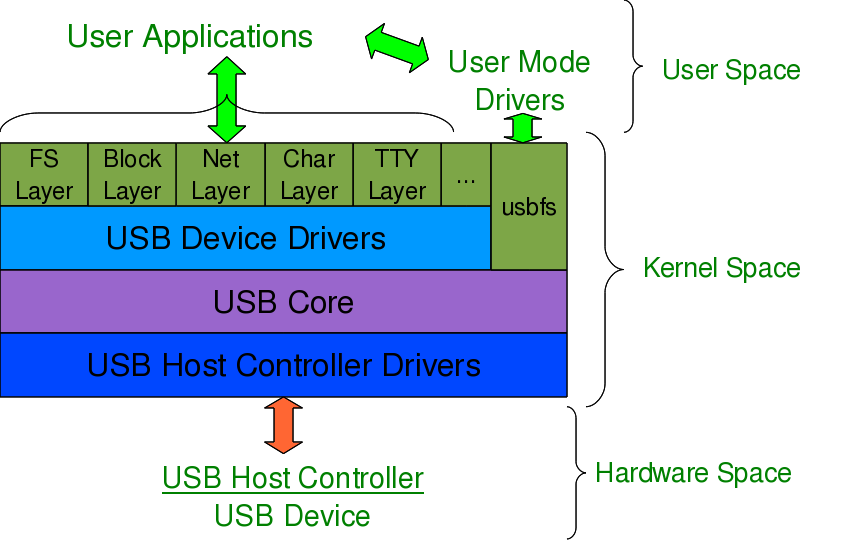
The USB device filesystem is a dynamically generated filesystem thatcomplements the normal device node system, and can be used to writeuser space device drivers. Writing of user space device drivers iscovered in the programmer's section of this guide. In addition to thedevice nodes, there are two files that are also generated - the
This package supports the following driver models USB Mass Storage Device from Gateway. Full Specifications. What's new in version 6.0.6000.20062. Date Added November 10, 2008. KDE user can use kinfocenter. Lsusb (package:usbutils) is the standard tool to query the connected USB devices. # lsusb Bus 005 Device 001: ID 0000:0000 Bus 004 Device 006: ID 0a5c:2110 Broadcom Corp. Bus 004 Device 001: ID 0000:0000 Bus 001 Device 001: ID 0000:0000 Bus 002 Device 001: ID 0000:0000 Bus 003 Device 001: ID 0000:0000. Generally USB drivers are supplied as part of the Windows 10 Operating System, sometimes, your PC manufacturer will supply specific USB hub drivers. Open Device Manager (accessible by right clicking your Start Button) At the bottom of the hardware section list is the USB devices section, expand that. Plasma Mobile and PinePhone provide you with the excitement of experimenting with the future of Free and Open Source mobile phones right now. The Pinephone is a tinkerer’s dream, letting you boot new operating systems with ease and tweak, expand, and update the hardware.


The information in the
The line that starts with
The line that starts with
Much like
Refer to the USB specification clause 9.7.1 for further information ondevice descriptors.
The lines that start with
The line that starts with
The line that starts with
The line that starts with
Kde Usb Devices Drivers
Refer to

Kde Usb Devices Driver Windows 10
- August 22, 2019 2.9.8
Device driver for all The Imaging Source USB cameras except the 33U, 37U, 38U and AFU auto focus series.
Version
2.9.8
Released
August 22, 2019
Type
ZIP
Filesize
3MB
Requirements
- Intel Core i3 or similar, 2 GB RAM
- USB 3.0 controller
- Graphics card with 24 or 32 bit
- Windows 7 (32 & 64 bit), Windows 8 (32 & 64 bit), Windows 10 (32 & 64 bit)
- DirectX 9.0c or higher
Changelog
- Added several internal interfaces for particular sensors (J003).
- January 25, 2019 2.9.6
Device driver for all The Imaging Source USB cameras except the 33U, 37U, 38U and AFU auto focus series.
Version
2.9.6
Released
January 25, 2019
Type
ZIP
Filesize
3MB
Requirements
- Intel Core i3 or similar, 2 GB RAM
- USB 3.0 controller
- Graphics card with 24 or 32 bit
- Windows 7 (32 & 64 bit), Windows 8 (32 & 64 bit), Windows 10 (32 & 64 bit)
- DirectX 9.0c or higher
Changelog
- Added missing Tonemapping Auto property.
- May 4, 2018 2.9.5
Device driver for all The Imaging Source USB cameras except the 33U, 37U, 38U and AFU auto focus series.
Version
2.9.5
Released
May 4, 2018
Type
ZIP
Filesize
3MB
Requirements
- Intel Core i3 or similar, 2 GB RAM
- USB 3.0 controller
- Graphics card with 24 or 32 bit
- Windows 7 (32 & 64 bit), Windows 8 (32 & 64 bit), Windows 10 (32 & 64 bit)
- DirectX 9.0c or higher
Changelog
- Enabled tonemapping for 8bit video formats, e.g. Y800, RGB24 and RGB32.
- November 21, 2017 2.9.4
Device driver for all The Imaging Source USB cameras except the 33U, 37U, 38U and AFU auto focus series.
Version
2.9.4
Released
November 21, 2017
Type
ZIP
Filesize
3.2MB
Requirements
- Intel Core i3 or similar, 2 GB RAM
- USB 3.0 or USB 2.0 controller (depends upon camera model)
- Graphics card with 24 or 32 bit
- Windows XP, Windows Vista, Windows 7 (32 & 64 bit), Windows 8 (32 & 64 bit), Windows 10 (32 & 64 bit)
- DirectX 9.0c or higher
Changelog
- Repaired not working J003 mono sensor pattern fix on particular video formats.
- This driver version is the last that works in Windows XP.
- January 9, 2017 2.9.3
Device driver for all The Imaging Source USB cameras except the 33U, 37U, 38U and AFU auto focus series.
Version
2.9.3
Released
January 9, 2017
Type
ZIP
Filesize
3.2MB
Requirements
- Intel Core i3 or similar, 2 GB RAM
- USB 3.0 or USB 2.0 controller (depends upon camera model)
- Graphics card with 24 or 32 bit
- Windows XP, Windows Vista, Windows 7 (32 & 64 bit), Windows 8 (32 & 64 bit), Windows 10 (32 & 64 bit)
- DirectX 9.0c or higher
Changelog
- Added a pattern fix for J003 mono sensors.
- January 9, 2017 2.9.1
Device driver for all The Imaging Source USB cameras except the 33U, 37U, 38U and AFU auto focus series.
Version
2.9.1
Released
January 9, 2017
Type
ZIP
Filesize
3.2MB
Requirements
- Intel Core i3 or similar, 2 GB RAM
- USB 3.0 or USB 2.0 controller (depends upon camera model)
- Graphics card with 24 or 32 bit
- Windows XP, Windows Vista, Windows 7 (32 & 64 bit), Windows 8 (32 & 64 bit), Windows 10 (32 & 64 bit)
- DirectX 9.0c or higher
Changelog
- Fixed the driver signature Code 52 error on new Windows 10 v1607 systems.
- January 15, 2016 2.8.9
Device driver for all The Imaging Source USB cameras except the 33U, 37U, 38U and AFU auto focus series.
Version
2.8.9
Released
January 15, 2016
Type
ZIP
Filesize
2.3MB
Requirements
- Intel Core i3 or similar, 2 GB RAM
- USB 3.0 or USB 2.0 controller (depends upon camera model)
- Graphics card with 24 or 32 bit
- Windows XP, Windows Vista, Windows 7 (32 & 64 bit), Windows 8 (32 & 64 bit), Windows 10 (32 & 64 bit)
- DirectX 9.0c or higher
Changelog
- Changed certificates so that the driver can also be installed in Vista.
- November 9, 2015 2.8.7
Device driver for all The Imaging Source USB cameras except the 33U, 37U, 38U and AFU auto focus series.
Version
2.8.7
Released
November 9, 2015
Type
ZIP
Filesize
2.3MB
Requirements
- Intel Core i3 or similar, 2 GB RAM
- USB 3.0 or USB 2.0 controller (depends upon camera model)
- Graphics card with 24 or 32 bit
- Windows XP, Windows Vista, Windows 7 (32 & 64 bit), Windows 8 (32 & 64 bit), Windows 10 (32 & 64 bit)
- DirectX 9.0c or higher
Changelog
- Fixed an error which can appear when using sharpness on older CPUs.
- October 20, 2015 2.8.5
Device driver for all The Imaging Source USB cameras except the 33U, 37U, 38U and AFU auto focus series.
Version
2.8.5
Released
October 20, 2015
Type
ZIP
Filesize
2.3MB
Requirements
- Intel Core i3 or similar, 2 GB RAM
- USB 3.0 or USB 2.0 controller (depends upon camera model)
- Graphics card with 24 or 32 bit
- Windows XP, Windows Vista, Windows 7 (32 & 64 bit), Windows 8 (32 & 64 bit), Windows 10 (32 & 64 bit)
- DirectX 9.0c or higher
Changelog
- Fixed a bug which can appear on LivePause call.
- July 15, 2015 2.8.0
Device driver for all The Imaging Source USB cameras except the 33U, 37U, 38U and AFU auto focus series.
Version
2.8.0
Released
July 15, 2015
Type
ZIP
Filesize
2.4MB
Requirements
- Intel Core i3 or similar, 2 GB RAM
- USB 3.0 or USB 2.0 controller (depends upon camera model)
- Graphics card with 24 or 32 bit
- Windows XP, Windows Vista, Windows 7 (32 & 64 bit), Windows 8 (32 & 64 bit), Windows 10 (32 & 64 bit)
- DirectX 9.0c or higher
Changelog
- Support of DFK ECU010-L34 with serial number property.
- Added tone mapping.
- February 17, 2015 2.7.33
Device driver for all The Imaging Source USB cameras except the 33U, 37U, 38U and AFU auto focus series.
Version
2.7.33
Released
February 17, 2015
Type
ZIP
Filesize
2.4MB
Requirements
- Intel Core i3 or similar, 2 GB RAM
- USB 3.0 or USB 2.0 controller (depends upon camera model)
- Graphics card with 24 or 32 bit
- Windows XP, Windows Vista, Windows 7 (32 & 64 bit), Windows 8 (32 & 64 bit), Windows 10 (32 & 64 bit)
- DirectX 9.0c or higher
Changelog
- The Auto Focus Onepush Running flag now resets correctly after the auto focus has finished.
- February 5, 2015 2.7.32
Device driver for all The Imaging Source USB cameras except the 33U, 37U, 38U and AFU auto focus series.
Version
2.7.32
Released
February 5, 2015
Type
ZIP
Filesize
2.4MB
Requirements
- Intel Core i3 or similar, 2 GB RAM
- USB 3.0 or USB 2.0 controller (depends upon camera model)
- Graphics card with 24 or 32 bit
- Windows XP, Windows Vista, Windows 7 (32 & 64 bit), Windows 8 (32 & 64 bit), Windows 10 (32 & 64 bit)
- DirectX 9.0c or higher
Changelog
- Video format MJPG (2592x1944) of DFK AFU050-L34 camera can now be used.
- January 14, 2015 2.7.31
Device driver for all The Imaging Source USB cameras except the 33U, 37U, 38U and AFU auto focus series.
Version
2.7.31
Released
January 14, 2015
Type
ZIP
Filesize
2.3MB
Requirements
- Intel Core i3 or similar, 2 GB RAM
- USB 3.0 or USB 2.0 controller (depends upon camera model)
- Graphics card with 24 or 32 bit
- Windows XP, Windows Vista, Windows 7 (32 & 64 bit), Windows 8 (32 & 64 bit), Windows 10 (32 & 64 bit)
- DirectX 9.0c or higher
Changelog
- Support for IMX236 based cameras.
- Support for RGB64 color formats.
- Several performance improvements.
- June 6, 2014 2.7.9.1152
Device driver for all The Imaging Source USB cameras except the 33U, 37U, 38U and AFU auto focus series.
Version
2.7.9.1152
Released
June 6, 2014
Type
ZIP
Filesize
2.1MB
Requirements
- Intel Core i3 or similar, 2 GB RAM
- USB 3.0 or USB 2.0 controller (depends upon camera model)
- Graphics card with 24 or 32 bit
- Windows XP, Windows Vista, Windows 7 (32 & 64 bit), Windows 8 (32 & 64 bit), Windows 10 (32 & 64 bit)
- DirectX 9.0c or higher
Changelog
- Added new properties: Brightness, sharpness, de-noise, saturation, hue and contrast.
- Added new property: Highlight reduction.
- Added new property: White balance temperature controls.
- Pixelfix for Y16 cameras now works as expected.
- VideoControl_ExternalTrigger (DirectShow property) can now be set as expected.
- January 1, 2014 2.6.5.1014
Device driver for all The Imaging Source USB cameras except the 33U, 37U, 38U and AFU auto focus series.
Version
2.6.5.1014
Released
January 1, 2014
Type
ZIP
Filesize
1.9MB
Requirements
- Intel Pentium IV or similar, 2 GB RAM
- USB 3.0 or USB 2.0 controller (depends upon camera model)
- Graphics card with 24 or 32 bit
- Windows XP, Windows Vista, Windows 7 (32 & 64 bit), Windows 8 (32 & 64 bit)
- DirectX 9.0c or higher
Changelog
- Fixed missing auto-gain for DFK AFU130.
- Fixed focus when start value is out of auto_focus_range.
- Fixed problem with AUTOFOCUS_ROI_RIGHT: minimum possibly wrong.
- Fixed auto focus ROI not working for 21*UC cameras.
- Fixed crash on load/connect with certain cameras 22/72xUC.
- Fixed previous exposure settings not being loaded on reconnect.
- Complete reworking of internal property system.
- Fixed Windows XP driver load crash.
- Fixed drop counter to be accessible from DirectShow.
- Fixed Windows 8 problem with certain video formats needing converters with standard DirectShow filters (e.g. Y800, capturing to an Y800 avi file was not possible).
- Fixed a problem with Windows 8 usbxhci driver not allowing transfers larger then 4 MB.
- February 26, 2013 2.4.14.851
Device driver for all The Imaging Source USB cameras except the 33U, 37U, 38U and AFU auto focus series.
Version
2.4.14.851
Released
February 26, 2013
Type
ZIP
Filesize
1.9MB
Requirements
- Intel Pentium IV or similar, 2 GB RAM
- USB 3.0 or USB 2.0 controller (depends upon camera model)
- Graphics card with 24 or 32 bit
- Windows XP, Windows Vista, Windows 7 (32 & 64 bit), Windows 8 (32 & 64 bit)
- DirectX 9.0c or higher
Changelog
- WHQL certification.