- Inside Out Networks Port Devices Driver Updater
- Inside Out Networks Port Devices Driver License Test
- Inside Out Networks Port Devices Drivers
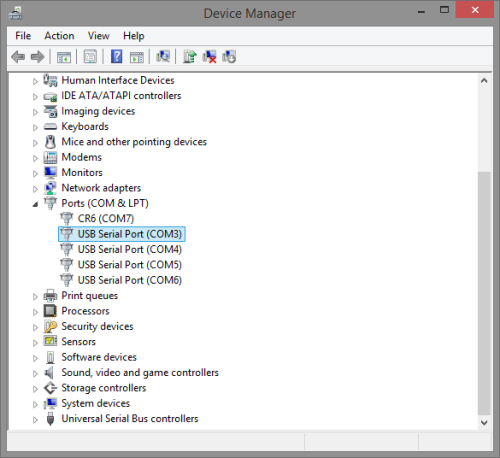
For example, NDIS is the network “port” driver, and Dxgport/Videoprt are the DirectX/video “port” drivers. Miniport drivers map a generic I/O request to a type of port into an adapter type, such as a specific network adapter. Miniport drivers are actual device drivers that import the functions supplied by a port driver. But no one has taken the idea of defense-in-depth to its logical conclusion: turn the network 'inside out.' Make every part of the network 'crunchy.' Push firewalls to every device on the network.
FlexiHub is a SaaS application for connecting to the remote USB devices over the network. FlexiHub supports all types of USB devices and does not require any device-specific drivers for redirecting USBs over the network. USBView is a GTK program that displays the topography of the devices that are plugged into the USB bus on a Linux machine. It also displays information on each of the devices. This can be useful to determine if a device is working properly or not. Requirements USBView uses GTK+ 3.x and requires that USB support to be compiled into your kernel.
On This Page:
If you are having problems connecting to the campus network via Ethernet, you should make sure your network adapter is configured properly. Note: The following instructions are for on-campus connections only. Off-campus users may need to contact their Internet Service Provider (ISP) or the IT Help Center.
As of fall 2011, all residence halls at UMass Amherst have been equipped with state-of-the-art wireless Internet access. Wired Ethernet connections are not available in these buildings. For more information, please see the Wireless in Residence Halls Installation Project page.
TCP/IP on Windows 7, 8, 8.1 & 10
- Go to Start > Control Panel > Network and Internet > Network and Sharing Center, then in the left-hand column, click Manage network connections.
- Right-click Local Area Connections and select Properties.
Note: The name of this connection may vary if you have changed it or if you have previously connected to other wired Ethernet networks. - Windows 7 might present you with a User Account Control window asking you for permission to continue. Click Continue to move on. A Local Area Connection Properties window will open.
- In the Connection Properties window, under This connection uses the following items:, select Internet Protocol Version 4(TCP/IPv4), then click Properties and make sure that Obtain an IP address automatically and Obtain DNS server address automatically are selected.
- If TCP/IP does not appear on the list under This connection uses the following items:, you must install it.
- Click Install.
- In the Select Network Feature Type window, select Protocol and click Add...
- In the Select Network Protocol window, choose TCP/IP and click OK, then follow any on-screen directions.
TCP/IP on Windows Vista
Note: UMass Amherst IT no longer offers support for Windows Vista.
- Go to Start > Control Panel > Network and Internet > Network and Sharing Center, then in the left-hand column, click Manage network connections.
- Right-click Local Area Connections and select Properties.
Note: The name of this connection may vary if you have changed it or if you have previously connected to other wired Ethernet networks. - Windows Vista might present you with a User Account Control window asking you for permission to continue. Click Continue to move on. A Local Area Connection Properties window will open.
- In the Connection Properties window, under This connection uses the following items:, select Internet Protocol Version 4(TCP/IPv4), then click Properties and make sure that Obtain an IP address automatically and Obtain DNS server address automatically are selected.
- If TCP/IP does not appear on the list under This connection uses the following items:, you must install it.
- Click Install.
- In the Select Network Feature Type window, select Protocol and click Add...
- In the Select Network Protocol window, choose TCP/IP and click OK, then follow any on-screen directions.

TCP/IP on Windows XP
Note: UMass Amherst IT no longer offers support for Windows XP.
- Go to Start > Control Panel > Network Connections.
- Right-click Local Area Connection, then click Properties and select the Networking tab.
- In the Local Area Connection Properties window, under This connection uses the following items:, select Internet Protocol (TCP/IP), then click Properties and make sure that Obtain an IP address automatically and Obtain DNS server address automatically are selected.
- If TCP/IP does not appear on the list under This connection uses the following items:, you must install it.
- Click Install.
- In the Select Network Component Type window, select Protocol and click Add...
- In the Select Network Protocol window, choose TCP/IP and click OK, then follow any on-screen directions.
TCP/IP on Mac OS X
- Go to Apple Menu > System Preferences. The System Preferences window will open.
- In the System Preferences window, under Internet & Wireless, click Network.
- In the Network window:
- In the Location drop-down window, select Automatic.
- Select Ethernet (at left).
- From the Configure IPv4 drop-down menu, select Using DHCP. DNS Server and Search Domains information will auto-populate.
- If DNS Server and Search Domains information do not auto-populate, click Advanced. The Ethernet window will appear.
- In the Ethernet window, on the TCP/IP tab, from the Configure IPv4 drop-down menu, select Automatically (if not already selected), then click OK.
- Click Apply, then close the Network window.
Inside Out Networks Port Devices Driver Updater
Estimated reading time: 4 minutes
The type of network a container uses, whether it is a bridge, anoverlay, a macvlan network, or a custom networkplugin, is transparent from within the container. From the container’s point ofview, it has a network interface with an IP address, a gateway, a routing table,DNS services, and other networking details (assuming the container is not usingthe none network driver). This topic is about networking concerns from thepoint of view of the container.
Published ports
By default, when you create or run a container using docker create or docker run,it does not publish any of its ports to the outside world. To make a port availableto services outside of Docker, or to Docker containers which are not connected tothe container’s network, use the --publish or -p flag. This creates a firewallrule which maps a container port to a port on the Docker host to the outside world.Here are some examples.
| Flag value | Description |
|---|---|
-p 8080:80 | Map TCP port 80 in the container to port 8080 on the Docker host. |
-p 192.168.1.100:8080:80 | Map TCP port 80 in the container to port 8080 on the Docker host for connections to host IP 192.168.1.100. |
-p 8080:80/udp | Map UDP port 80 in the container to port 8080 on the Docker host. |
-p 8080:80/tcp -p 8080:80/udp | Map TCP port 80 in the container to TCP port 8080 on the Docker host, and map UDP port 80 in the container to UDP port 8080 on the Docker host. |
IP address and hostname
By default, the container is assigned an IP address for every Docker network itconnects to. The IP address is assigned from the pool assigned tothe network, so the Docker daemon effectively acts as a DHCP server for eachcontainer. Each network also has a default subnet mask and gateway.
When the container starts, it can only be connected to a single network, using--network. However, you can connect a running container to multiplenetworks using docker network connect. When you start a container using the--network flag, you can specify the IP address assigned to the container onthat network using the --ip or --ip6 flags.
When you connect an existing container to a different network usingdocker network connect, you can use the --ip or --ip6 flags on thatcommand to specify the container’s IP address on the additional network.
In the same way, a container’s hostname defaults to be the container’s ID inDocker. You can override the hostname using --hostname. When connecting to anexisting network using docker network connect, you can use the --aliasflag to specify an additional network alias for the container on that network.
DNS services
By default, a container inherits the DNS settings of the host, as defined in the/etc/resolv.conf configuration file. Containers that use the default bridgenetwork get a copy of this file, whereas containers that use acustom networkuse Docker’s embedded DNS server, which forwards external DNS lookups to the DNSservers configured on the host.
Custom hosts defined in /etc/hosts are not inherited. To pass additional hostsinto your container, refer to add entries to container hosts filein the docker run reference documentation. You can override these settings ona per-container basis.
| Flag | Description |
|---|---|
--dns | The IP address of a DNS server. To specify multiple DNS servers, use multiple --dns flags. If the container cannot reach any of the IP addresses you specify, Google’s public DNS server 8.8.8.8 is added, so that your container can resolve internet domains. |
--dns-search | A DNS search domain to search non-fully-qualified hostnames. To specify multiple DNS search prefixes, use multiple --dns-search flags. |
--dns-opt | A key-value pair representing a DNS option and its value. See your operating system’s documentation for resolv.conf for valid options. |
--hostname | The hostname a container uses for itself. Defaults to the container’s ID if not specified. |
Proxy server
Inside Out Networks Port Devices Driver License Test
If your container needs to use a proxy server, seeUse a proxy server.